AI Filmmakers Are Only Pipe Dreaming to Replace Commercial Directors or Any Directors
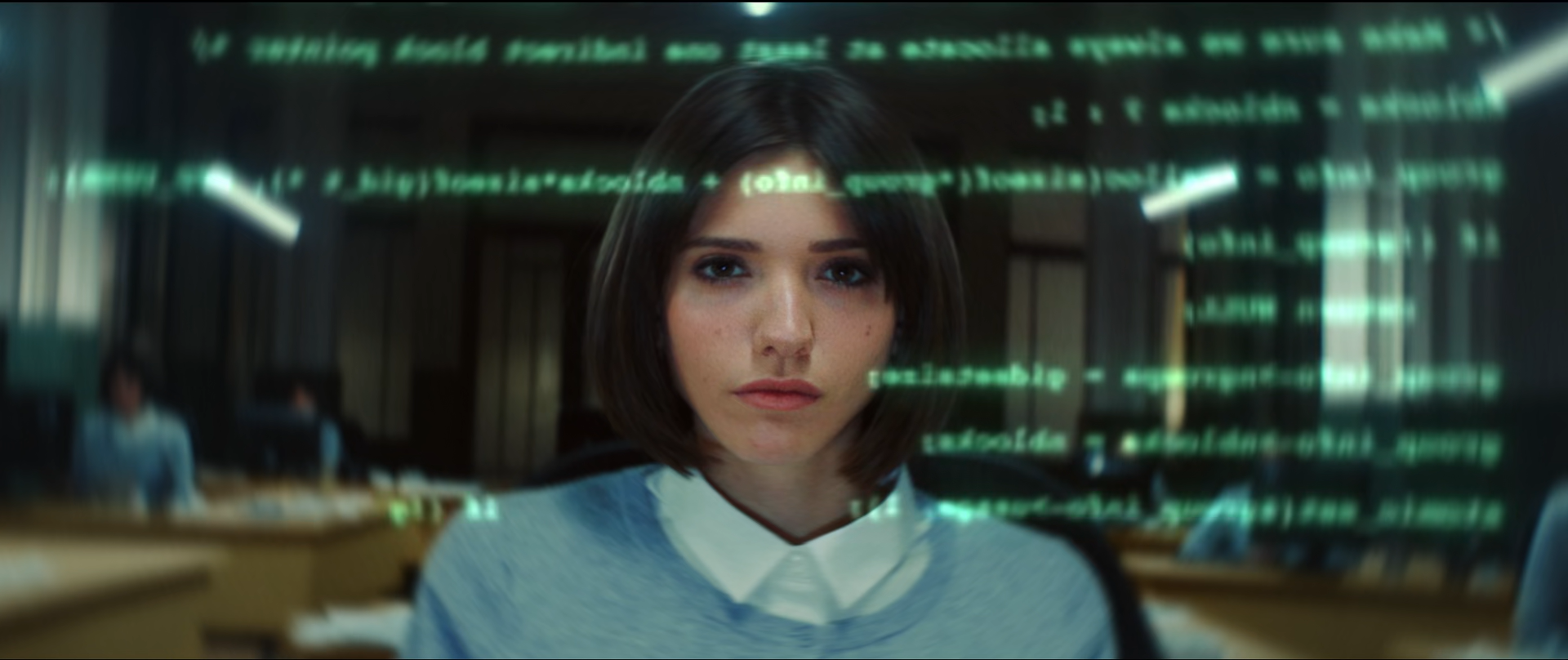
Wake Up: Pepsi Director's Cut
A vast majority of AI filmmakers believe that a commercial director or any director comes on board only to transport the script to the screen. In reality, a commercial director or any director comes on board to justify the film. Each of them comes with a strong track record of directing specific brands or niches. Through years of directing those brands, they unearth the brand language, target audiences, and emotional core. Each brand, niche, or scene deserves its own filmmaking treatment.
For example, lighting not only complements the cinematographic needs but also contributes to storytelling. This is why we notice motivational lighting in gymnastics or sports brands, diffused lighting in baby products and sanitary napkins, bokeh lighting in festival commercials or romance-driven scenes, and textured lighting or high-key lighting in fashion commercials. These are a few examples of lighting approaches.
Most ads revolve inside houses. These spaces are highly influenced by interior design styles. Sometime they communicate a character’s social status or geographic location. For example, panel moulding or wooden slats reflect a celebrity’s house, while wooden columns reflect a South Indian household. Then the interior design approaches: eclectic, minimalist, Nordic, etc. As well as spaces such as attics, lofts, etc.
Coming to wardrobe, each type of woman saree is associated with a region. A Banarasi saree underscores a character from West Bengal. A Gara saree underscores that character is Persian or Iranian. The endless variants of women’s outfits, men’s fashion, kids’ fashion, Indo-western costumes, and distinctive printed motifs all contribute to storytelling. Sometimes, directors are so laser-focused that they dispute over a thin line of a motif.
The subject of cinematography is vast. It incorporates shots, photographic composition, lenses, camera movement, and a ton of other approaches inspired by Hollywood movies. Handheld vs steady camera movement mirrors two contrasting emotions. Lens choices also contribute to storytelling. For example, placing a wide-angle lens too close to the face creates distortion; mirrors a quirky character. Using a wide-angle lens inside a tiny corridor unfolds vastness and creates long perspective lines. Rack focus helps redirect the viewer’s attention. Anamorphic lenses bring a sense of luxury with their bending effect.
There are endless colour palettes. These colour palettes exist beyond brand colours that we often notice in the lead character’s costume and art direction. A monochromatic palette vs a complementary palette carries two contrasting meanings. Each colour and its hues evoke distinct human emotions and meanings. Sepia tones evoke nostalgia, black with red evokes power and luxury, red evokes seductiveness, orange is associated with violence, pink carries feminism, etc.
Coming to shots, there are other shots also exist beyond master, close-up, extreme close-up, medium, OTS, wide, establishing shot, two-shot, profiles, ¾, subjective, objective and macro. Each shot is handpicked to shape the narrative. Agencies may even demand a pedestal shot out of the blue.
With all this, each story and scene deserve conviction. A director has to come up with montages to set the environment, hold pacing to create suspense, use swish pans and handheld shots to create energy, or decide whether a story demands fast-forward stock footage or slow motion.
While creating characterization, a director has to see from the character’s perspective: a character’s own choices (in Fincher’s masterpiece Se7en, Mills hits the door against Somerset’s willingness), character arc (Michael Corleone’s transformation from a patriot to a ruthless gangster in The Godfather, or Genny, an innocent boy who fears to squeezing a gun eventually ruling the Naples crime syndicate in the Italian crime series Gomorrah), character backstory (Dolores and Maeve in Westworld), character’s subconscious vs. conscious conflict (Tony Soprano from the iconic TV show The Sopranos), and character uniqueness (Jimmy Shergill’s eye in Mukkabaaz, Rahul Bhatt’s voice in Kennedy). So, the characterization is far beyond a floral top, varsity jacket, puffy hair, or a few accessories.
Ad film producers and agencies are expecting all of this from anyone who labels themselves an AI filmmaker. Without adopting these vivid details, AI filmmakers end up generating emotionless stock videos. Typing terms like “mise-en-scène” into prompts will not help. However, these emotionless videos can replace CG shots, drone footage, stock footage, product demos, etc. This is how ad film producers and agencies can leverage from AI filmmaking.
As Hollywood stellar Ben Affleck pointed out in a recent podcast, AI cannot replace the nuances of filmmaking or human emotion. But we can streamline AI to create different aspects of filmmaking.